About Larry

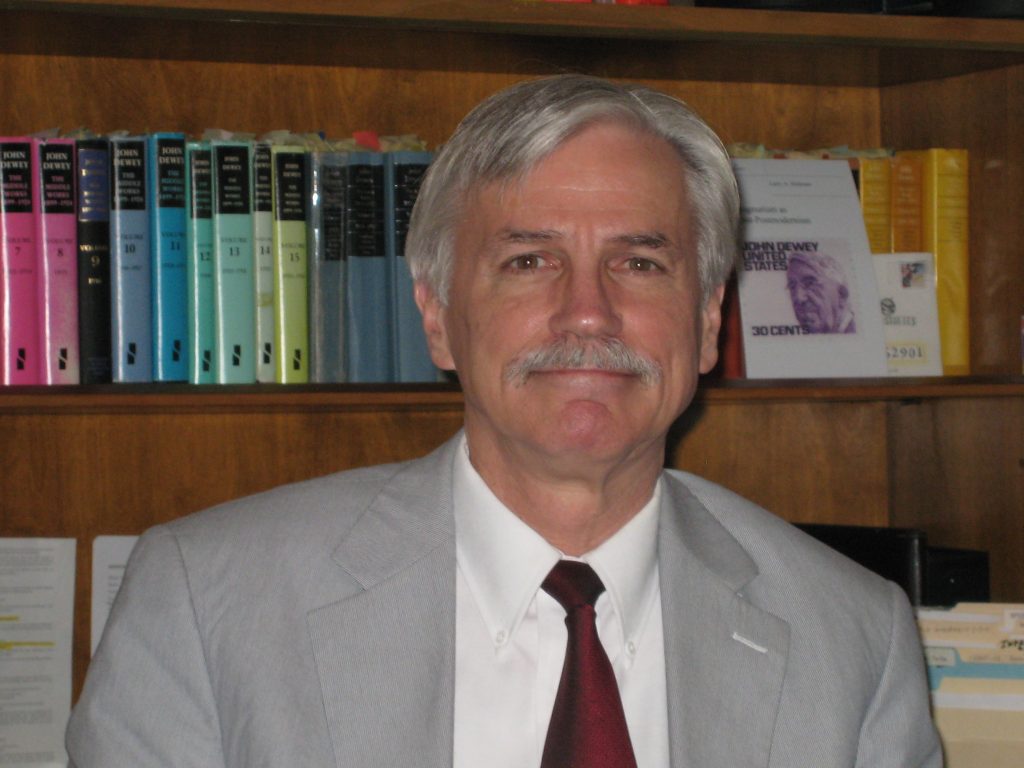
Larry A. Hickman

Professor Emeritus, Department of Philosophy
Director Emeritus, Center for Dewey Studies
Southern Illinois University Carbondale

*Featured on the Official University of Oregon website*

“Larry A. Hickman is an internationally-recognized authority on the life and thought of philosopher John Dewey. His research explores the philosophy of technology, philosophy of education, environmental philosophy, American philosophy and pragmatism, critical theory, film studies, and the philosophy of religion.

“In 2015, a collection of Hickman’s essays, John Dewey Forever Young: Hickman on Dewey (ed. Wang Chengbing, China Legal Academic Press) was published. He also wrote and narrated the educational DVD, John Dewey: His Life and Work (2001), which is widely used in departments of philosophy and education, and received a CINE Golden Eagle Award in 2001. Hickman’s publications have been the recipients of three “Outstanding Academic Title” awards from Choice, and his work has been translated into a half-dozen languages.

“Prof. Hickman was a Phi Kappa Phi Scholar, and has served as president of the Southern Illinois University Carbondale chapter of Phi Kappa Phi. He has also served as president of several national and international societies, including the John Dewey Society, Society for the Advancement of American Philosophy, Society for Philosophy and Technology, and Southwestern Philosophical Society. He has served on numerous executive and advisory boards, including those of the Association for Documentary Editing, the International Pragmatism Society, the Dewey-Center Köln (Germany), and the Center for Studies of Dewey and American Philosophy at Fudan University (Shanghai, China). Internationally-known for his scholarship on themes such as technology, democracy, and education, Hickman has lectured in nineteen foreign countries.”

Seigfried – ‘Hickman is a phenomenon’

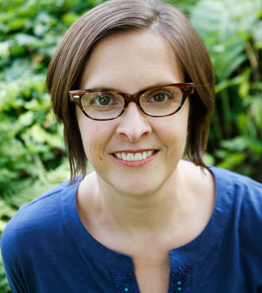
Charlene Haddock Seigfried, Purdue University

Larry  Hickman is a phenomenon. He  has done more than any person I know to make John Dewey and pragmatism known and appreciated throughout the world.  Two of his major  accomplishments are enough to demonstrate this, both of which span decades. Through his meticulous leadership at the Dewey Center at Southern Illinois University the critical editions of The Complete Works of John Dewey were painstakingly produced and widely lauded. Larry made the center not only a magnet for Dewey scholars, but an important venue for conferences, and a place for good companionship.  As if this were not enough, he established the Dewey Centers all over the world, which continue to be active hubs of scholarship.  They are a tremendous legacy and will ensure that pragmatist philosophy will continue to have an impact on important issues. I have many happy memories of good times with European scholars at some of these centers 

Larry has been a true friend and ever-supportive colleague.  He was one of the few persons who honored every aspect of my work, not only research and lectures on Dewey, but feminism at a time when it was (more) contentious, William James, and even technology. Whether we got together at Southern Illinois University, at conventions at home and abroad, on panels, or at SAAP, I always learned from Larry’s extensive philosophical interests. He was also fun to talk with and the best guide to outstanding restaurants and wine choices. In fact, I wouldn’t even have been at some of these events if Larry hadn’t made it happen. What I’m trying to say is that in a profession where women were often excluded, Larry always made me feel welcome and appreciated.  I am more than happy to return the favor and join many others who have been lucky enough to know you.

Brister – Democracy and the Promise of the Future

Evelyn Brister

Rochester Institute of Technology

Every generation faces both promise and peril. In the last century, Americans faced the challenge of the Cold War and the excitement of space exploration; we confronted fears of terrorism and the opportunities of information technology. Today’s young people are entering a world of COVID and climate change at the same time that we benefit from global prosperity and connectedness.

This dialogue spans the generations to consider how democratic action is both boosted and challenged by social media, and how biotechnology and information technology can address environmental problems and increase social connection when used responsibly. Using an interview technique, we’ll press our understanding of democratic engagement, technology, and sustainability to uncover our worst fears and discover what everyone can do to prevent those fears from coming true.

Pappas – Does Technological Pragmatism have a robust enough normative standpoint that can advance philosophy of technology?

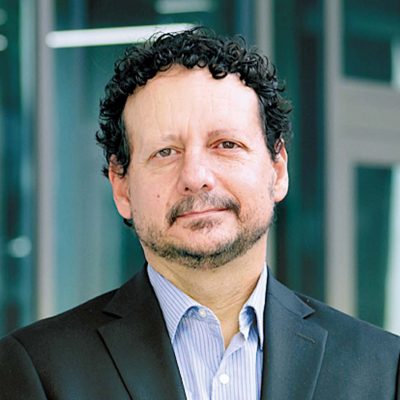
Dr. Gregory Pappas

Texas A&M

Hickman deserves our respect for trying to get Technological Pragmatism the respect it deserves in philosophy of Technology. In spite of all his great efforts there are still critics or skeptics about its normative guidance. My paper will focus on an important debate between Hickman and Borgmann, where Borgmann claims that pragmatism does not have enough “normative substance” to evaluate particular technologies and to guide with the everyday use of technology.

In spite of Hickman’s heroic efforts to convince critics like Borgmann about the virtues of Pragmatism, they continue to see a weakness in regard to its normative standpoint or commitments, they are just not robust enough. Pragmatism lacks concrete “thick” guidance and a substantive view of about what should center life, makes life worth living, or what is the good life.

In this paper I take on this challenge to Pragmatism’s reputation. My strategy complements, but is different than Hickman’s reply to Borgmann. I think we can say a lot more on behalf of the normative “thickness” of Pragmatism, we just need to do it in a way that is consistent with our commitment to experimentalism-contextualism.

I argue that Pragmatism provides a normative standpoint as well as practical guidance of which virtues are needed in our technological culture. Pragmatism provides a solid and empirical philosophical framework that avoids two common extremes: a naïve optimism that encourages adoption of any new technology; and a pessimistic resistance to technological innovations. More importantly, and to address the charge of not being normatively “thick” enough, we need to argue that Pragmatism stands by the values and virtues of democracy as a way of life. Moreover, pragmatism, as much as Borgmann and the Amish, have deep seated value commitments: a view of what should centers life or makes life worth living. Dewey’s philosophy, in particular, has a view about what are the most important type of relationships, experiences or activities in life. That should be enough basis to evaluate out everyday use of technologies.

McKenna – ‘Hickman has always been a generous scholar and mentor’

Dr. Erin McKenna, University of Oregon

I am not sure when I first met Larry Hickman (sometime in the early 1990s), but I know my life got more interesting when I did. Our shared intellectual interests took us to conferences (along with Michael Eldridge) that included adventures such as sailing in Vermont and riding bikes in Berlin–both of which turned out to be great fun (but a bit risky). Hickman has been an important influence on my work, both in personal conversation and through print. I especially enjoyed my time as a visiting scholar at the Dewey Center in Carbondale, IL. As I was reading through Dewey’s correspondence (before it was published), Hickman was always open to hearing about what I was finding and thinking. We don’t always agree on things, but I have found ours to be an important transactional relationship that has shaped my philosophical work and my life more generally. His work in starting the Summer Institute in American Philosophy (SIAP) has also been transformative of the field. I have attended many SIAP meetings. In addition to allowing for more in-depth study and conversation than a normal conference, SIAP provided invaluable contact among generations of scholars. Hickman has always been a generous scholar and mentor. Though I could never join him in sipping tequila, I will always remember our SIAP trips winding through the Oregon wine country drinking good wine and discussing philosophy and life.